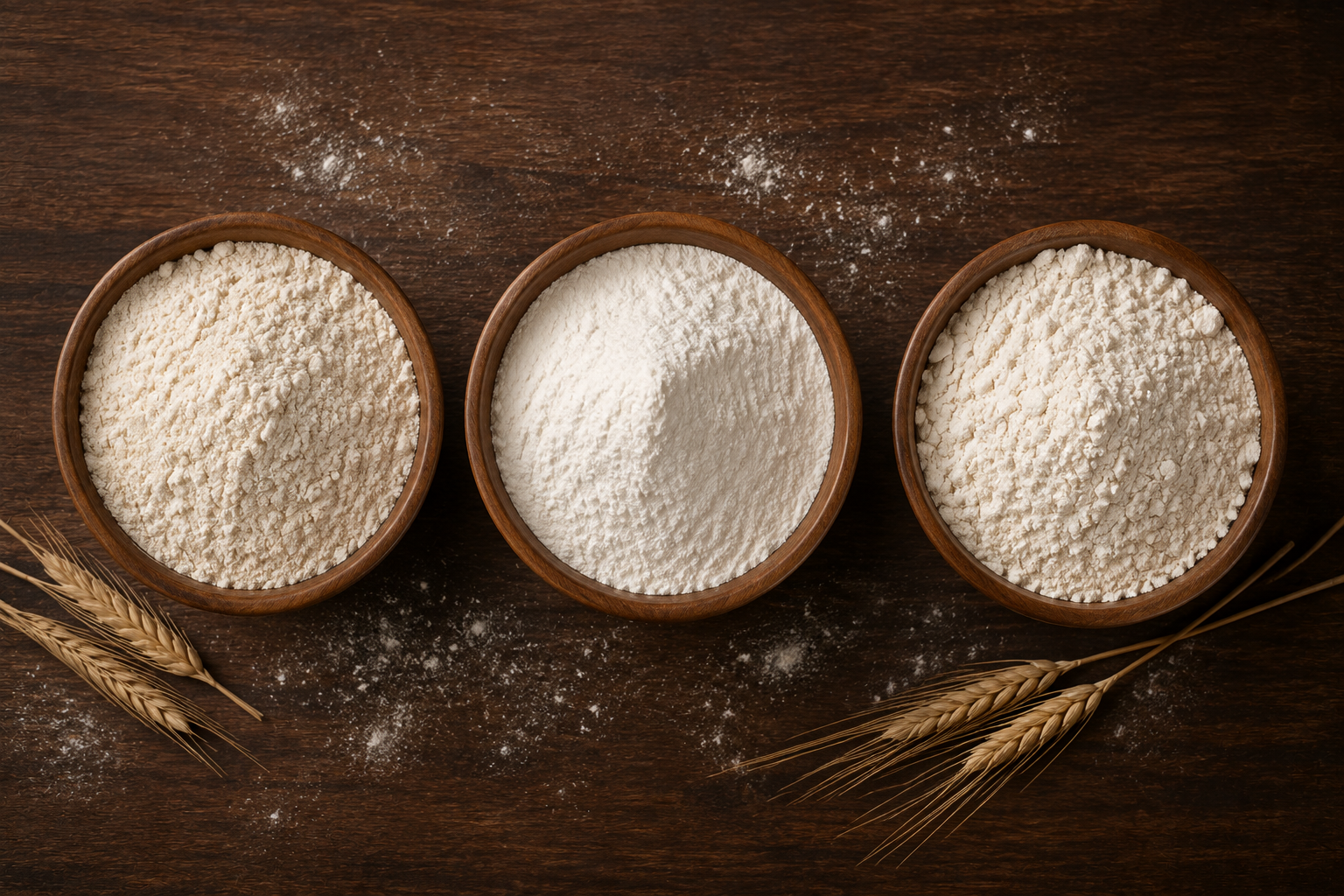
The question almost every Indian baker asks first is whether maida is the same thing as all purpose flour. The short answer is: nearly, but not quite, and the gap matters far more for bread than it does for cake.
Flour is the cheapest thing in your kitchen and the one most likely to be responsible for a batch you throw away. Here is what actually separates the bags.
Is maida all purpose flour?
Maida is refined wheat flour. The bran and germ are milled away and what is left is the endosperm, ground very fine. In that structural sense it is the same category of product as American all purpose flour.
The difference is protein. Indian maida usually sits around 8 to 10 percent protein, and it varies by mill and by batch. American all purpose flour is typically 10 to 12 percent. Indian maida is also milled finer, because it is made for parathas, puris and samosa patti as much as for cakes.
Which means, in practice, that Indian maida behaves more like what an American recipe would call pastry flour than what it calls all purpose. A recipe developed abroad will give you a slightly softer, slightly less structured result with maida. For most cakes that is invisible or even an improvement. For bread, pizza base, choux and laminated doughs it is the reason the recipe did not work.
What protein is actually doing
Two proteins in wheat, glutenin and gliadin, combine with water to form gluten. Gluten is an elastic net. The more protein, the stronger the net, the more structure and chew you get. Less protein means a weaker net, which means tenderness and a finer crumb.
That is the whole trade off. Structure or tenderness. Everything else follows from it.
| Flour | Protein | Use it for |
|---|---|---|
| Cake flour | 7 to 9% | Sponge, chiffon, genoise, anything that must be light |
| Maida (Indian refined) | 8 to 10% | Most cakes, cookies, short pastry, puff, samosa, general use |
| All purpose (imported style) | 10 to 12% | Cookies with chew, muffins, general baking |
| Bread flour / high gluten | 12 to 14% | Bread, pav, buns, pizza, brioche |
| Atta (whole wheat) | 11 to 13% | Roti, wholemeal loaves, part substitution in cakes |
Note where atta sits. It is high in protein but the bran physically cuts through the gluten net as it forms, so wholemeal bread comes out denser than the protein figure would suggest. Protein tells you the potential. Bran decides how much of it you get.
Making cake flour out of maida
Proper cake flour is not always easy to source outside the metros, and it is a real cost jump. You can get most of the way there with cornflour, which has no protein at all and dilutes the maida.
Per 120g of maida (roughly one cup), take out 15g and put back 15g of cornflour. Then sift the mixture three times. The sifting is not optional, and it is doing two jobs: distributing the cornflour evenly and aerating the flour so the batter takes air more readily.
To be clear on a question people search constantly: cornflour and maida are not the same thing and are not interchangeable. Maida is milled wheat. Cornflour is starch extracted from maize, with no gluten forming protein whatsoever. Swapping one for the other one to one will not work.
Bread flour, and why Indian bread bakers struggle
If your bread is coming out squat and tight no matter what you do to the proving, the flour is the first place to look. Indian wheat is generally softer than Canadian or American hard wheat, and standard maida simply does not have the protein for a high hydration open crumb.
Two ways forward. Buy a dedicated high protein or bread flour, which is now widely available wholesale even if your local kirana does not carry it. Or add vital wheat gluten to maida, roughly 10 to 20g per kilogram, which lifts the protein by about one to two points. The second is cheaper and works well enough for pav, burger buns and sandwich loaves. It does not fully replicate a proper bread flour for artisan work.
The health question, answered straight
Customers ask, and a defensive answer sounds worse than an honest one.
Refined flour has had the bran and germ removed, so it carries less fibre and fewer micronutrients than whole wheat, and it raises blood sugar faster. That is simply what refining does. It is also why maida makes a lighter cake: the same removal that takes out the fibre takes out the things that interfere with a fine crumb.
If you want to offer a wholemeal option, start at 25 to 30 percent atta replacing maida rather than going straight to full substitution. Add about 5 to 8 percent more liquid, because bran absorbs water, and let the batter rest ten minutes before baking so it hydrates properly. Expect a denser crumb and a nuttier flavour, and price it as a different product rather than a like for like swap.
And for the other question that comes up: maida is not gluten free. It is wheat. Anyone avoiding gluten for medical reasons cannot eat it, and that is not a matter of quantity.
What to check when you buy
Flour is a commodity right up until the batch that ruins a week of orders.
- Smell it. Fresh flour smells faintly sweet and of nothing much. Sour, musty or crayon-like means the fat in it has gone rancid, and it will carry into the bake.
- Feel it. It should run through your fingers. Lumps that hold their shape mean it has taken on moisture.
- Look at it in daylight. Dark specks in maida mean bran got through. Not dangerous, but it will speckle a white sponge.
- Check the pack date, not just the expiry. Flour is best in the first three months.
- Buy the same thing twice. Consistency between batches is worth more than a small saving, because every recipe you have is calibrated to the flour you have been using.
Storage does the rest, and in most of India that means an airtight container rather than the paper bag it came in. Weevils and moisture are covered properly in our guide to storing baking ingredients in Indian humidity.
Why flour is the wrong place to save money
Some arithmetic worth doing once.
A 1kg sponge cake uses roughly 300g of flour. If wholesale flour saves you ₹8 a kilogram against retail, that is ₹2.40 per cake. Real, but small.
Now the other side. One failed 1kg cake costs you the full ingredient load, somewhere around ₹400 to ₹500 depending on what went into it, plus three or four hours you cannot get back. That single failure is worth roughly 190 cakes of flour savings.
So the honest conclusion is not “buy the cheapest flour” and it is not “buy the most expensive”. It is: buy flour whose protein you know and whose supply you can repeat, and stop chasing the rupee. The place where wholesale buying genuinely moves your margin is the expensive middle of your recipe, cream, chocolate and packaging, not the flour. Our note on pricing cakes properly shows where each of those actually lands.
Weigh it, do not scoop it
The largest single source of inconsistency in Indian home baking is not the flour. It is the cup.
A cup of maida spooned in lightly weighs about 120g. The same cup, dipped straight into the bag and packed, can weigh 150g or more. That is a 25 percent error on the structural ingredient, and it is why the same recipe gives a light cake one week and a rubbery one the next.
A kitchen scale costs less than one failed order. If you are still building out your kitchen, it should be near the top of the list, and our breakdown of what it actually costs to start a home baking business covers the rest.
Common questions
Is maida all purpose flour?
Nearly, but not exactly. Both are refined wheat flour with the bran and germ removed. Indian maida usually runs 8 to 10 percent protein against 10 to 12 percent for American all purpose, and it is milled finer, so it behaves closer to what an American recipe would call pastry flour. For cakes the difference is minor. For bread, pizza and choux it is the reason the recipe failed.
What is maida made of?
Wheat. Specifically the endosperm of the wheat grain, with the bran and germ milled away and the remainder ground very fine.
Is maida gluten free?
No. Maida is wheat flour and it contains gluten. Anyone avoiding gluten for medical reasons cannot eat it in any quantity.
Are corn flour and maida the same?
No, and they are not interchangeable. Maida is milled wheat and forms gluten. Corn flour is starch extracted from maize and contains no gluten forming protein at all. Swapping one for the other one to one will not work.
How do I make cake flour at home?
For every 120g of maida, roughly one cup, remove 15g and replace it with 15g of corn flour, then sift the mixture three times. The corn flour dilutes the protein and the sifting distributes it and aerates the mix.
Is maida unhealthy?
Refining removes the bran and germ, so maida carries less fibre and fewer micronutrients than whole wheat and raises blood sugar faster. That is what refining does, and it is also why maida makes a lighter cake. As with most things it is a question of how much and how often rather than a simple yes or no.
Five things to do this week
- Look at the protein figure on the flour you are using right now. Many packs state it. If yours does not, that is worth knowing too.
- Weigh one cup of your flour the way you normally scoop it. Whatever number comes up is the error you have been baking with.
- Try the cornflour cake flour swap on your standard sponge and bake both side by side.
- If you make bread, run one batch with 15g of vital wheat gluten per kilogram of maida and see whether the crumb opens up.
- Standardise on one flour for cakes and one for bread, and buy them from the same source repeatedly. Consistency is a purchasing decision before it is a technique.
Most baking problems that look like technique problems are flour problems wearing a disguise. Once you know what is in the bag, the recipes stop being mysterious.
Ivykart supplies these ingredients wholesale to bakeries and home bakers across India, with a GST invoice on every order. Sign up in the app with your phone number and order in minutes. Questions: 8801348400 or care@ivykart.com.