Storage advice written for temperate kitchens does not survive an Indian monsoon. Here is what actually goes wrong, and what to do about it.
Flour
The problem is weevils and moisture, in that order. Flour bought in bulk and left in its paper sack will find weevils within weeks in warm weather. Damp flour clumps, weighs inaccurately and bakes unpredictably.
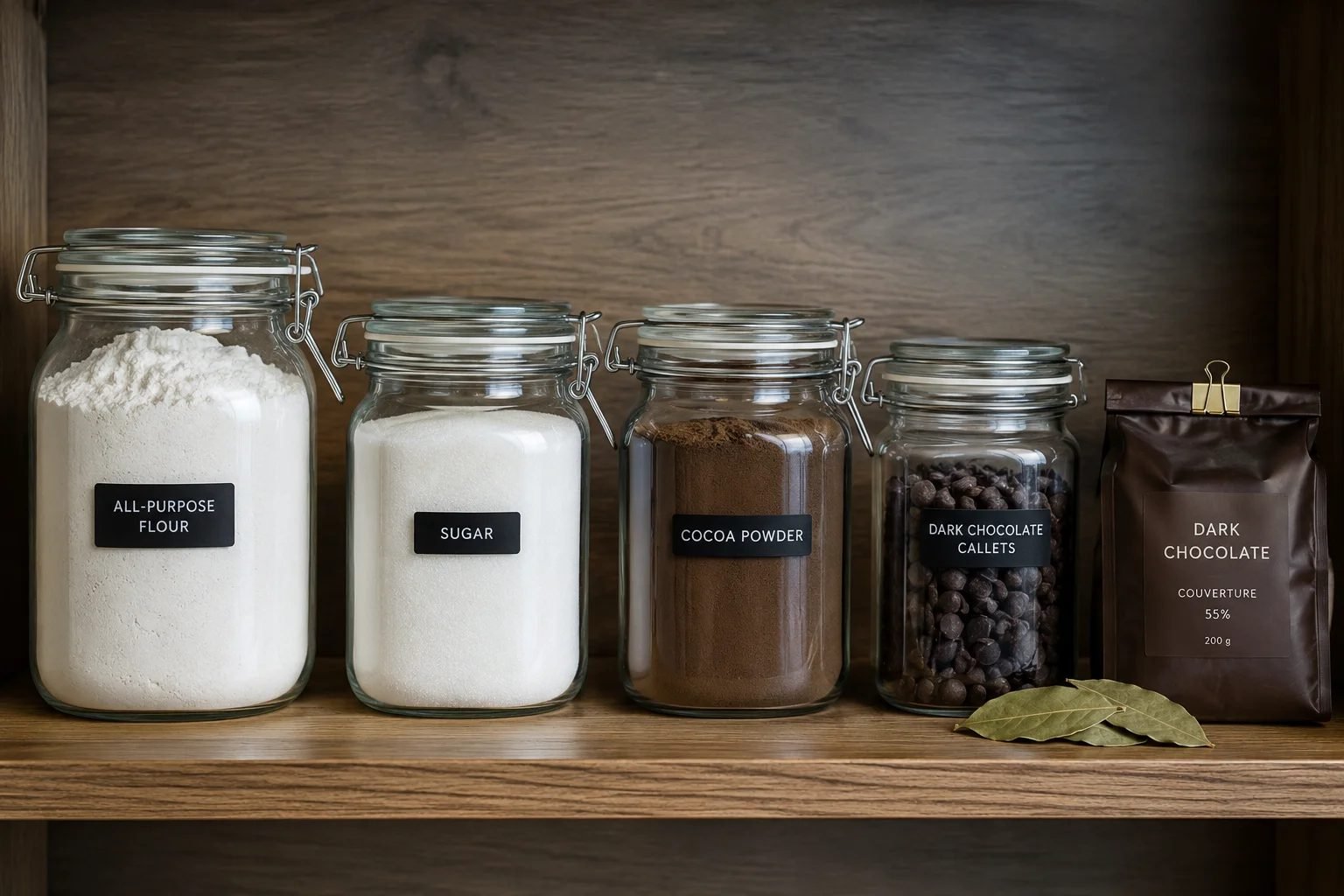
Move flour into airtight containers the day it arrives. Not the bag inside a container, the flour itself. A few bay leaves in the container genuinely deters weevils. If you buy in 25kg quantities, decant a working amount and keep the rest sealed and off the floor.
In the monsoon, weigh rather than measure by volume. Damp flour packs differently and a cup is no longer a cup.
Chocolate
Bloom is the enemy, and there are two kinds. Fat bloom, the greyish streaking, comes from temperature swings. Sugar bloom, a gritty surface, comes from moisture.
Ideal storage is 15 to 18°C at moderate humidity, which almost nobody has. In practice:
- Stable is better than cold. A cupboard that stays at 26°C all day beats a fridge you open constantly.
- If you must refrigerate, wrap airtight and let it come to room temperature fully sealed before opening. Unwrapping cold chocolate causes condensation, and condensation causes sugar bloom.
- Never store near spices or onions. Chocolate absorbs odours readily.
Bloomed chocolate is safe to eat and fine for baking. It is only a problem for coating and decoration.
Cream
The chain matters more than the storage. Cream that has warmed in transit will not whip properly even after re-chilling. If you take a delivery, get it into the fridge immediately and check the packaging is cold to the touch, not just intact.
Non-dairy whipping creams are considerably more forgiving in heat, which is why so many Indian bakeries use them for anything that must travel or sit out. Dairy cream tastes better and behaves worse.
Sugar
Granulated sugar is stable but hygroscopic. In humidity it sets into a solid block. Airtight containers, and if a block forms, a day with a slice of bread in the container softens it.
Icing sugar is worse because of its cornflour content. Sieve before every use in the monsoon.
Brown sugar has the opposite problem: it dries out and hardens. Airtight, with a small piece of clay disc or apple, keeps it soft.
Nuts and dried fruit
Nuts contain oil, and oil goes rancid in heat. Refrigerate or freeze anything you will not use within a month. Rancid nuts are the most common cause of an off flavour that bakers cannot place.
Dried fruit hardens in dry air and moulds in humid air. Airtight either way.
Essences, colours and gels
Away from light and heat. Alcohol-based essences evaporate through poorly sealed caps and lose strength over a season. Gel colours thicken but are usually still usable.
Weevils, properly
Weevils are the single most common storage complaint in Indian kitchens, and most of the advice about them is folklore.
The important thing to understand is that they usually arrive with the flour rather than walking in. Eggs are laid in the grain before milling and hatch when conditions suit, which is why a sealed bag can develop weevils on its own and why a spotless kitchen is no protection.
What actually works:
- Freeze new stock for four days before it goes into storage. This kills eggs and larvae and is the only step that deals with the problem at source. Four days at freezer temperature, then bring it to room temperature still sealed so condensation does not form inside the bag.
- Decant into airtight containers immediately. The paper bag flour arrives in is not a storage container, it breathes, and weevils move between bags easily.
- Buy in quantities you will use in six to eight weeks. Bulk buying flour is a false economy if a third of it is discarded.
- Check the back of the shelf monthly. Infestations start in the container nobody opens.
Bay leaves and neem in the container are widely recommended and, at best, mildly deterrent. They do not kill eggs already in the flour, so treat them as an addition to freezing rather than a replacement for it.
If you find weevils, discard that container’s contents. Do not sift and use, and do not bake them out. Then empty, wash and thoroughly dry every neighbouring container, because they will have spread.
A storage table for an Indian kitchen
Realistic shelf lives in Indian conditions, which are shorter than the ones printed on packaging designed for temperate climates.
| Ingredient | Where | Realistic life |
|---|---|---|
| Maida | Airtight, cool cupboard | 3 months |
| Atta | Airtight, cool cupboard | 1 to 2 months, the germ oil goes rancid |
| Cocoa powder | Airtight, away from light | About a year |
| Compound chocolate | 18 to 22°C, sealed | About a year |
| Couverture | 16 to 18°C, sealed, no fridge | 12 to 18 months |
| Butter | Fridge, wrapped | 1 month, or 6 months frozen |
| Non-dairy whipping cream | Freezer | Per pack, 5 to 7 days once thawed |
| Dairy whipping cream | Coldest shelf, never the door | To the printed date, no freezing |
| Instant yeast | Fridge once opened, freezer for long term | 3 to 6 months opened |
| Baking powder | Airtight, dry | 6 to 12 months |
| Nuts | Fridge or freezer | 6 months, rancid fast at room temperature |
| Essences and gel colours | Dark cupboard, upright | About 2 years |
Two things worth testing rather than trusting. Baking powder: half a teaspoon into hot water should fizz vigorously and immediately. If it bubbles lazily, it is finished, and it will take a cake down with it. Yeast: a teaspoon in warm water with a pinch of sugar should foam within ten minutes.
The monsoon and power cut plan
Two Indian realities that storage advice written elsewhere never accounts for.
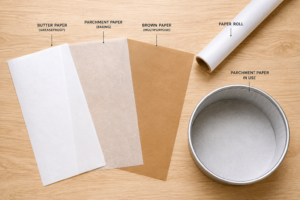
Monsoon. Ambient humidity does the damage, not rain. Sugar cakes solid, cocoa clumps, gel colours weep, and cardboard packaging loses its stiffness. Silica gel sachets in dry goods containers are cheap and genuinely effective, and it is worth keeping the ones that come in shoeboxes and electronics. Nothing dry should be stored on the floor or against an outside wall during those months. The same applies to boxes and boards, which is covered in our note on cake packaging, and to your paper stock, in butter paper and parchment.
Power cuts. Keep the fridge and freezer shut. A full freezer holds safe temperature for around 24 hours unopened, a half empty one for roughly half that, which is a good argument for keeping bottles of water in the empty space. Thawed non-dairy cream that has warmed should not be refrozen: the emulsion breaks and it will never whip properly again.
Common questions
How do I stop weevils getting into flour?
Freeze new flour for four days before storing it, then keep it in an airtight container rather than its paper bag, and buy in quantities you will use within six to eight weeks. Weevil eggs usually arrive inside the flour, so freezing at the point of purchase is the step that matters most.
Why has my chocolate turned white?
That is bloom, not fungus, and it is safe to eat. Fat bloom comes from temperature swings and looks like greyish streaks, and it can be fixed by re-melting and re-tempering. Sugar bloom comes from moisture, feels gritty, and cannot be reversed. There is more detail in our note on compound and couverture chocolate.
Can I store chocolate in the fridge?
Better not to, unless the room genuinely stays above the chocolate’s melting point. Fridge storage invites sugar bloom when the chocolate comes out into humid air. If you must, seal it well and let it return to room temperature still wrapped.
How long does whipping cream last?
Non-dairy cream keeps frozen to its printed date and about five to seven days once thawed in the fridge. Dairy whipping cream should be used by its printed date and does not freeze well. Our guide to whipping cream in India covers the handling in full.
Is flour that smells sour still usable?
No. A sour, musty or crayon-like smell means the fat in the flour has gone rancid, and that flavour carries straight through into the bake. It will not improve with baking and it is not worth the batch.
The general rules
- Airtight beats everything. Most Indian storage failures are moisture failures.
- Stable temperature beats low temperature, especially for chocolate.
- Off the floor and away from the wall. Both are damp during monsoon.
- Label with the date received. Buying wholesale only saves money if you use it before it turns.
- Buy to your actual usage. A 25kg sack is not a saving if you throw away eight kilos.
Ivykart supplies these ingredients wholesale to bakeries and home bakers across India, with a GST invoice on every order. Sign up in the app with your phone number and order in minutes. Questions: 8801348400 or care@ivykart.com.